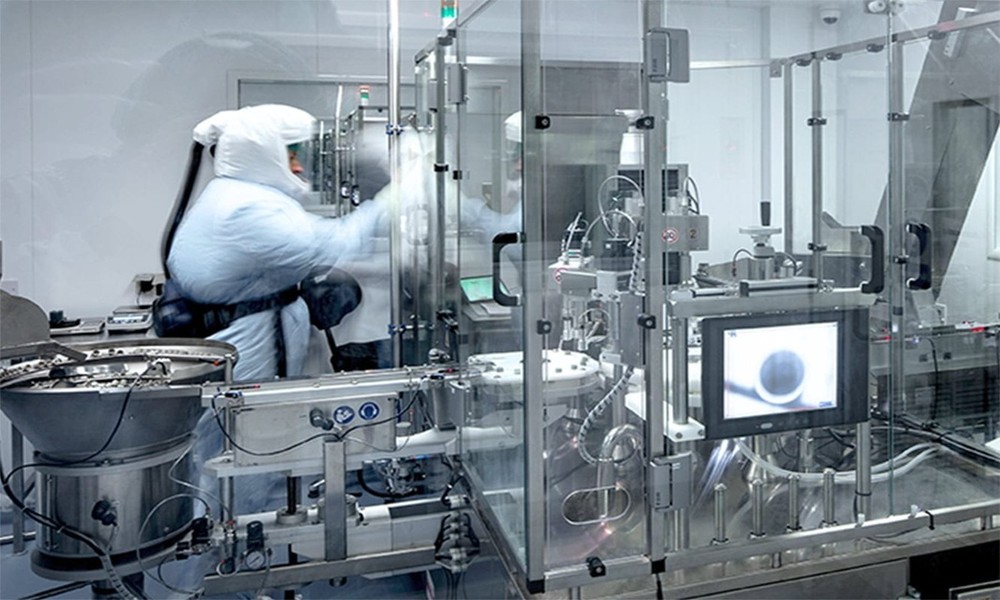
Medical clean room assembly brings together trained personnel, controlled environments, and validated processes to build devices that must meet strict contamination and dimensional standards before they reach a patient. The assembly stage is where individually validated components become a functional device, and where contamination risks are highest: handling, joining, testing, and packaging all involve human contact with parts that must leave the facility sterile and free of particulate contamination. Getting this stage right requires more than a clean room certificate on the wall.
What Clean Room Assembly Involves
Assembly operations performed in a classified clean room environment include sub-assembly of components, adhesive bonding, ultrasonic welding, mechanical fastening, leak testing, functional testing, labelling, and primary packaging. Each step introduces a contamination opportunity, and each must be performed in sequence under conditions that maintain the classification of the environment.
The clean room classification governs the maximum allowable particle count per cubic metre of air. ISO Class 7 permits no more than 352,000 particles of 0.5 microns or larger per cubic metre. ISO Class 8 permits 3,520,000 particles at the same size. For assembly of sterile devices that will be filled with an injectable or will contact sterile body tissue, Class 7 or Class 5 environments are the standard. For non-sterile device assembly, Class 8 is typical.
Personnel as the Primary Contamination Source
In a classified assembly environment, personnel generate the largest share of contamination. Every person sheds skin cells, hair, and textile fibres continuously. Talking, sneezing, and sudden movement all spike the local particle count. The gowning protocol, which typically includes a full clean room suit, hood, gloves, shoe covers, and face mask, forms a barrier between the person and the environment, but it does not eliminate the risk. It reduces it to manageable levels.
Medical clean room assembly personnel train to understand which movements generate particles, how to handle components without touching critical surfaces, and how to maintain posture and pace inside the room to avoid disrupting airflow patterns. New assemblers begin with observation periods and limited tasks before they progress to full assembly responsibility.
Process Validation
ISO 13485 requires that processes where output cannot be fully verified by inspection must be validated. Assembly steps where bond integrity, seal quality, or connector engagement cannot be confirmed visually fall into this category. For each such step, the validation study demonstrates that the process consistently produces the required outcome across the range of operator and material variation expected in production.
“In healthcare, the highest form of quality assurance is preventing the problem before it reaches the patient,” Minister for Health Ong Ye Kung has stated in discussions on Singapore’s healthcare standards. Process validation in medical assembly is the operational expression of that principle: building the evidence that the process is right before a single production unit ships.
Validation records for clean room assembly cover the equipment, the materials, the operators, the procedure, and the environment. They remain part of the device master record throughout the product’s commercial life.
White Room Versus Clean Room Assembly
Not every medical device assembly requires a classified clean room. White rooms, which implement contamination controls through air filtration, gowning requirements, and material handling procedures without formal particle count classification and continuous monitoring, suit devices with lower contamination sensitivity.
Medical clean room assembly under formal ISO classification is specified by device type, intended use, and the regulatory pathway. Sterile devices, implantable devices, and those contacting sterile body cavities require the controlled and monitored environment that a classified clean room provides. Devices with a lower contamination sensitivity, such as Class I external contact devices, may be assembled in a white room environment with appropriate controls.
The decision between white room and clean room assembly belongs in the device risk management file. Justify it with the hazard analysis for your device, not with the cost comparison between the two environments.
In-Process Inspection
Assembly in a clean room does not change the need for inspection at key stages of the build sequence. Visual inspection under controlled lighting, dimensional verification with calibrated instruments, and functional testing of sub-assemblies all occur within the classified environment. Removing a partially assembled device from the clean room for inspection and returning it introduces contamination and requalification requirements that slow production more than in-room inspection does.
Inspection stations within the assembly clean room are validated as part of the overall area qualification. The lighting level, the inspection procedure, and the accept/reject criteria are documented and form part of the device manufacturing record for each production batch.
Packaging Within the Clean Room
For devices that will be terminally sterilised after packaging, primary packaging is completed inside the clean room before the device leaves the controlled environment. The packaging validation confirms that the seal integrity and packaging configuration maintain sterility through the sterilisation process and across the device’s stated shelf life.
Sterile device assembly and primary packaging performed in the same classified environment shortens the handling chain and reduces the number of environmental transitions that introduce contamination risk between the last assembly step and the sealed package.
Medical clean room assembly, when validated and managed to the standard the device classification demands, produces devices that meet their safety and performance specifications from the first unit to the last in every production batch.